



A Visit To Jordan
K.S. Bhaskar
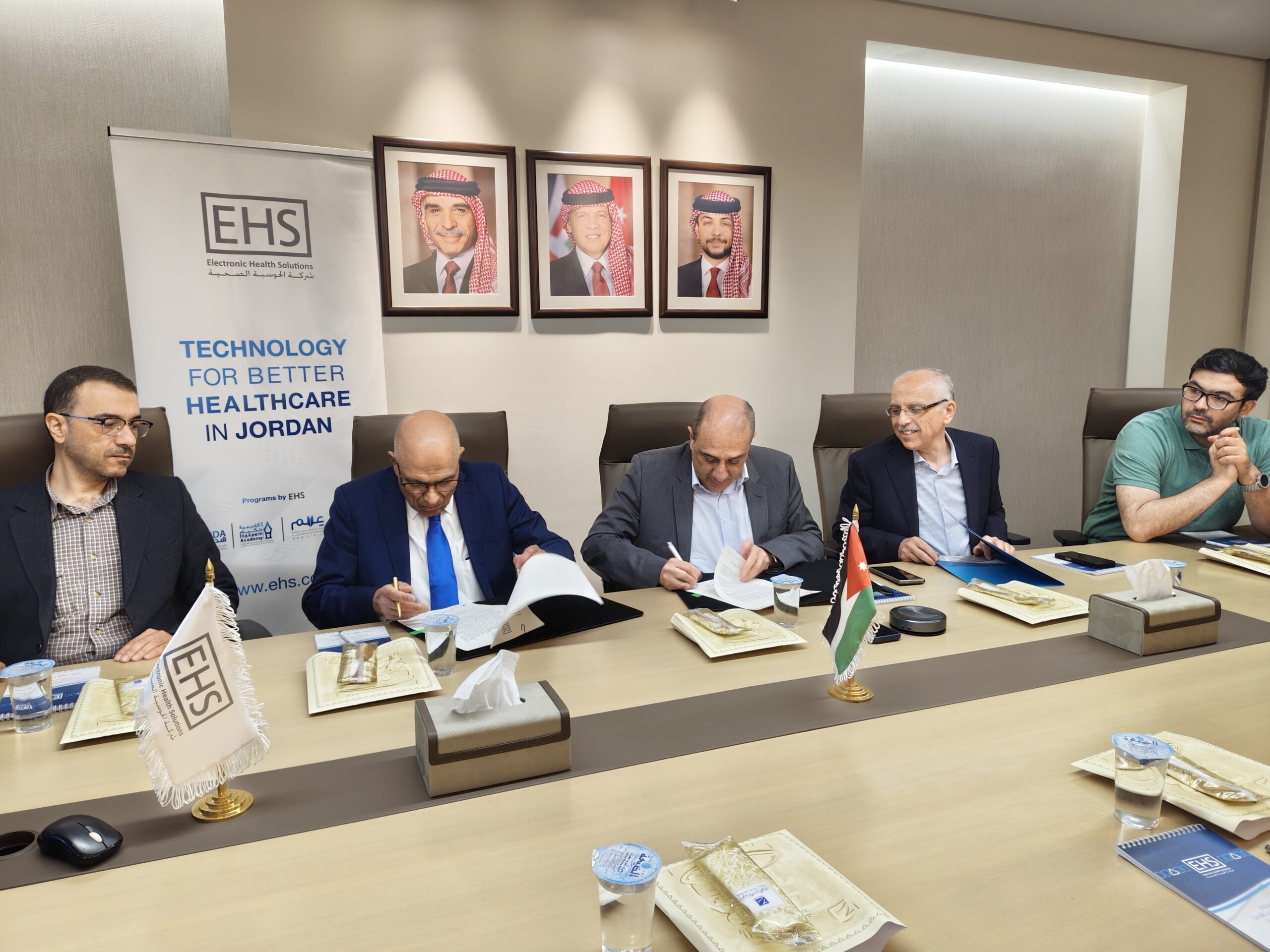
I spent the week of June 7, 2026 in Amman, Jordan with the DevOps team of Electronic Health Solutions (EHS). We monitored the health of the servers, reorganized the database, brought up a new server, and did training. YottaDB and EHS also signed an extension of our support agreement.
Unlike the slow-moving VistA replacement effort at the US Department of Veterans Affairs (VA), EHS has continued to invest in and modernize VistA, transforming it into Hakeem – a true Jordanian digital health success story. While the VA has largely underinvested in maintaining and evolving VistA, allowing it to be characterized as outdated, EHS has leveraged the platform as a foundation for innovation. Examples include the My Hakeem mobile app for patients, and the Dr@Hakeem app for healthcare providers which enables clinicians to manage appointments, access patient medical records, and support clinical decision-making from anywhere.
Today, several Hakeem implementations are operated or supported by EHS across Jordan.
- All Jordanians are entitled to free or low cost healthcare, through the Ministry of Health (MoH). The MoH Hakeem system is the largest healthcare information system in the country, connecting all public hospitals and most public clinics through a single VistA-based platform. As a result, a patient from Aqaba receiving treatment in Amman can have their complete medical history accessed instantly. During my visit, I observed peak usage of around 9,000 concurrent users with the infrastructure handling the load effortlessly. This may well be the largest VistA deployment in the world. As the rollout expands to additional clinics, the number of concurrent users is expected to grow further.
- Members of the Jordanian armed forces, military retirees, and their families receive care through the Jordanian Royal Medical Services (RMS), which operates its customized and integrated Hakeem system. Whie smaller than the MoH deployment, it serves a large and important patient population.
- The King Hussein Cancer Centre, one of the leading cancer institutions in the Middle East, also operates its own specialized and integrated Hakeem implementation tailored to the unique needs of oncology case.
- In addition, several smaller, specialized healthcare organizations across Jordan operate Hakeem systems designed to support their specific clinical and operational requirements.
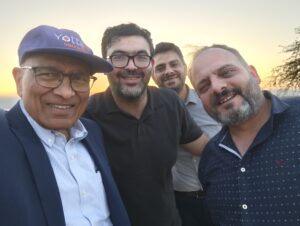 It was not all work and no play. One evening after we were done in the office, my hosts took me to the Dead Sea, about an hour’s drive from Amman. The altimeter on my watch registered 330m below sea level. In comparison, it showed the parts of Amman I was in at around 1000m above sea level – since I did not calibrate it for ambient air pressure, the difference in height is more meaningful than the actual readings.
My hosts were the epitome of graciousness, especially when it came to food. They took me out to wonderful dinners at Khashoka, Alia and Fakhreldin restaurants, and a take-out lunch from one of my personal favorites, Abu Jbara. Jordan has the world’s best falafel in my opinion – you can’t go wrong ordering falafel anywhere, from a hole-in-the-wall to the finest restaurant. It is always crisp outside, soft inside, and tastes delicious. Some places have interesting embellishments such as sesame seeds on the crust. When he learned that I liked mujadara, one of my hosts brought in home-cooked mujadara for my lunch the next day.
Were there any clouds in the silver lining? Yes, two.
- Since seven out of ten Jordanian men, and almost a third of women, smoke, it’s hard to get away from the odor of tobacco. With a few exceptions, it would not be uncommon for diners at the next table to light up, often ordering shishas from the restaurant. Fortunately, my room at the Grand Hyatt Amman was on a non-smoking floor, and there was no smoking in any of the indoor public areas or at breakfast.
- From time to time, air-raid sirens would go off as missiles and drones flew through Jordanian airspace, followed by the all-clear a few minutes later. I had not heard air-raid sirens since my college days in India, at the time of the 1971 birth of Bangladesh. People in Amman ignored the sirens and life went on as normal, but they were upsetting to the young son of one of my hosts.
EHS and YottaDB have more than a vendor-customer relationship. We are proud to be a partner in the journey of EHS and Hakeem, the most successful VistA implementation I have seen. It was simultaneously exhilarating and sobering to realize that the medical records of almost everyone I set eyes on resided in a YottaDB database. I always enjoy Jordan, and look forward to my next visit.
Credits
- Photographs by the author’s camera.
Published on June 23, 2026